




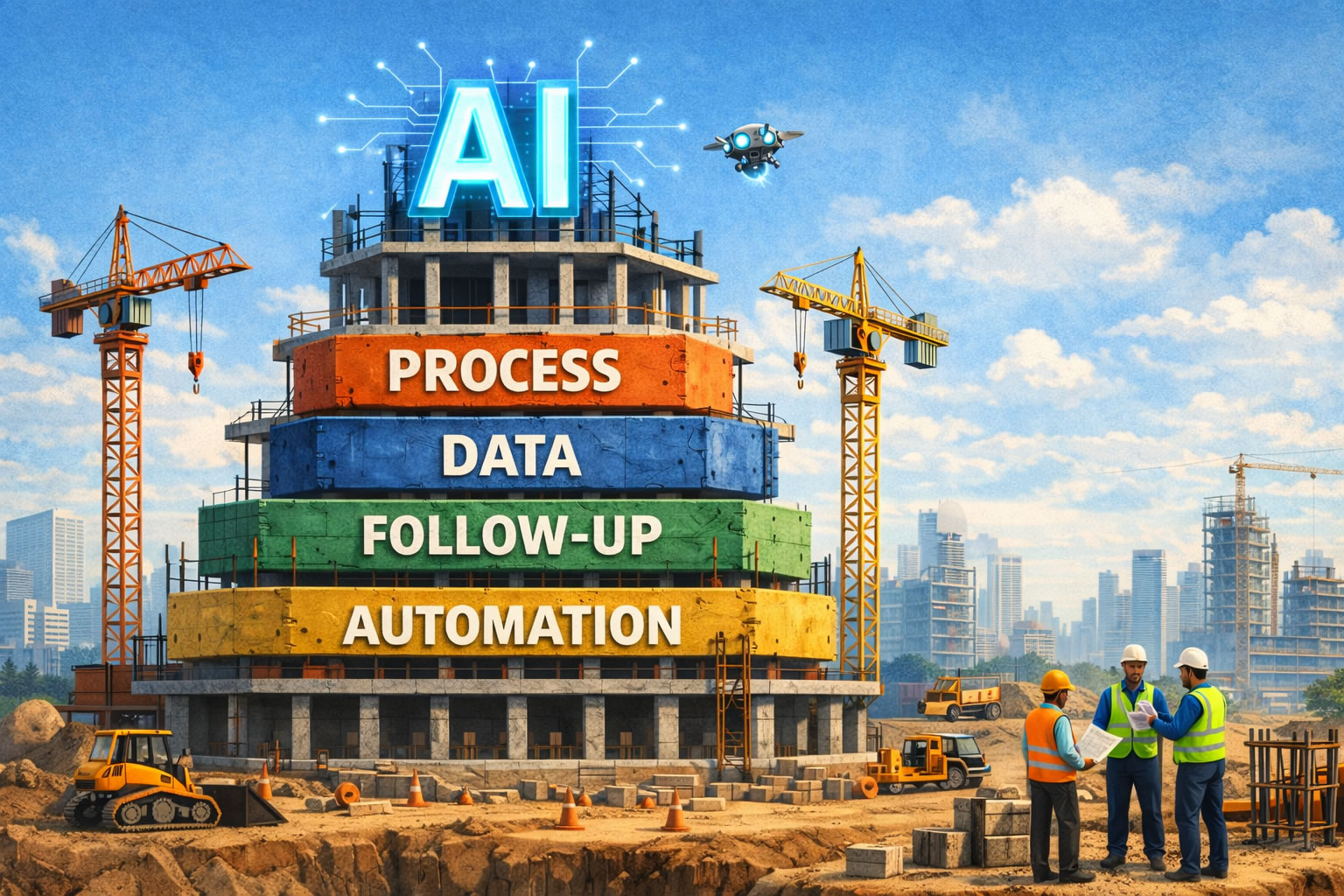

AI is one of the topics we get asked about most.
That is not surprising. There is a huge amount of noise in the market, and every week there seems to be another platform promising AI assistants, autonomous outreach, or a smarter way to convert leads.
We are watching the space closely, and we do think AI will play a meaningful role in sales and marketing over time.
But we also think it is important not to confuse AI, automation, and good sales process.
They overlap. They can support each other. But they are not the same thing.
And in our view, many property groups looking at AI today would get more immediate value by first getting the foundations right.
Our position
We are cautiously open to AI, but we do not think it should be overhyped.
In a property sales environment, the basics still matter most:
- getting leads to the right person quickly
- responding while intent is still high
- running consistent nurture journeys
- keeping the database clean
- making sure communication feels personal and comes from a real person
- understanding where enquiry is coming from
- prioritising the right opportunities
- seeing clearly where leads are sitting, stalling, or dropping away
Those things are often more important than whether a business is “using AI.”
In fact, many of the outcomes people want from AI are actually outcomes of better workflow design, cleaner data, stronger automation, and better operating discipline.
The mistake businesses make
A lot of teams start with the wrong question.
They ask:
“How do we use AI?”
Often the better question is:
“Where are leads being lost, delayed, or mishandled in our current process?”
Because in many cases, the problem is not that the business lacks AI.
It is that:
- enquiries are not routed properly
- speed-to-lead is too slow
- follow-up is inconsistent
- nurture is too manual or does not exist
- agents are sending ad hoc communication instead of structured sequences
- old or duplicated data is cluttering the database
- source tracking is weak
- pipeline reporting is unclear
- re-engagement is reactive rather than planned
No AI layer fixes that by itself.
Where we think the biggest value sits today
For most property developers, project marketers, and sales teams, the biggest gains right now are still in foundations and automation.
1. Better lead routing
One of the most important parts of a sales process is making sure the right lead gets to the right person quickly.
That can mean routing by project, location, stock type, agent, team, source, or lead quality.
It sounds basic, but it has a major impact. If routing is loose, delayed, or inconsistent, good leads go cold before anyone has had a real chance to work them.
Before businesses look at AI-driven lead handling, they should first make sure their lead routing rules are clear and dependable.
2. Faster speed-to-lead
In most sales environments, timing matters.
If a new enquiry sits untouched, gets picked up late, or falls into a queue with no urgency, conversion opportunity drops quickly.
This is one of the clearest examples of where automation can be more valuable than AI.
Simple things like alerts, task creation, ownership rules, reminders, and response workflows can improve outcomes materially without creating a robotic buyer experience.
If a business is asking for AI, but still does not respond quickly and consistently to fresh enquiry, the priority is probably wrong.
3. Proper nurture workflows
This is one of the biggest opportunities in property sales.
A large portion of enquiry is not ready to buy today. That does not make it low value. It just means the sales process needs to account for timing, interest, and changing intent.
Well-designed nurture journeys help keep leads warm, relevant, and engaged over time.
That may include:
- enquiry acknowledgement sequences
- project updates
- stock release or price change alerts
- milestone-based communication
- inspection or appointment follow-up
- re-engagement campaigns for older enquiry
- reminders driven by inactivity or lack of follow-up
This is often where businesses say they want AI, when what they really need is a more structured communication strategy.
4. Cleaner database practices
Dirty data creates bad outcomes.
Duplicate records, poor ownership, weak note-taking, inconsistent source capture, outdated status values, and bloated contact lists all reduce the effectiveness of sales and marketing.
It also makes any future AI layer less useful.
If the underlying CRM data is messy, the analysis will be messy too.
Before thinking about AI-driven insights, teams should focus on the discipline of maintaining a database that is accurate, structured, and usable.
5. Agent-driven communication from real identities
This is a particularly important point in a sales context.
In our view, communication still works best when it feels like it is coming from a real person.
That does not mean every message must be written manually from scratch. It does mean the communication should feel personal, credible, and connected to an actual agent or team member.
This is why workflows that support communication from a real email address or real SMS identity are often more powerful than generic automated broadcasting.
For a buyer, there is a big difference between receiving a well-timed, relevant message from a real person versus receiving something that feels like it came from a machine.
Where third-party AI tools can fit into a real working day
We do think third-party AI tools can be useful today, especially at an individual workflow level.
For a sales agent, that might look like:
- using ChatGPT or Microsoft Copilot to help draft a follow-up email after a phone call
- turning rough notes into a cleaner summary before logging them into the CRM
- rewriting a message to improve tone, clarity, or structure
- drafting a re-engagement email for older leads
- summarising a long email thread before responding
- preparing a simple call plan before speaking with a buyer
For a property developer, project marketer, or sales manager, that might look like:
- summarising campaign performance commentary for an internal meeting
- turning raw sales notes into clearer weekly updates
- helping structure project launch communications
- drafting FAQs, update emails, or internal talking points
- reviewing long-form marketing or project communications for consistency
Those are useful, practical applications.
But they are still support tools. They do not replace the need for clear workflow, good judgement, or a strong operating rhythm.
Where AI may become more relevant over time
Where we do see meaningful longer-term potential is in better analysis.
In particular, we think AI may become genuinely useful in helping businesses analyse communication patterns across the data they already hold, such as:
- email history
- notes
- SMS history
- call summaries or transcripts
- follow-up timelines
- response patterns
- lead behaviour over time
That could eventually help with things like:
- improving lead scoring logic
- identifying which behaviours correlate with better conversion
- spotting stalled leads earlier
- understanding common objections
- highlighting which campaigns are producing lower-quality enquiry
- surfacing patterns that would otherwise be difficult to see manually
That is an area we think has real promise.
But even there, the starting point is still the same: good data, clean records, and consistent operating practice.
AI is not a substitute for operating discipline
This is probably the core point.
A business can have access to the best AI tools in the world, but still underperform if:
- leads are not owned clearly
- follow-up is inconsistent
- nurture is weak
- communication lacks structure
- reporting is poor
- source data is unreliable
- database hygiene is low
On the other hand, a business with strong foundations and thoughtful automation will usually be in a much better position to benefit from AI when the right use case emerges.
That is why we think the order matters.
First, get the process right.
Then automate what should be automated.
Then apply AI where it genuinely adds value.
Final view
We do not think AI should be dismissed.
But we also do not think every sales or marketing challenge should be framed as an AI problem.
In property CRM, the biggest gains today often still come from better routing, faster response times, stronger nurture, cleaner data, clearer reporting, and communication that feels genuinely human.
AI may sit on top of that in useful ways over time.
But it is not the foundation.
And in our view, the businesses that get the fundamentals right first will be the ones best placed to benefit from AI later.

