






Conversation With Founder of SRQ Projects, Nick Clydsdale

Nick Clydsdale brings a depth of experience to SRQ projects that few in the industry can match. After a 15‑year career with CBRE Residential Projects, he relocated from Sydney to the Gold Coast in 2014 and quickly established himself as a leading figure in residential project marketing across South East Queensland and Northern NSW. Since then, he has guided teams through the launch and settlement of more than 26 projects, achieving over $4 billion in retail sales, a level of performance that has set a new standard in the region’s premium market.
In this conversation, Nick shares how disciplined systems, structured lead management, automation, and operational visibility underpin consistent sales performance at scale. Rather than focusing on tools alone, we explore the workflows, standards, and best-practice processes that support high-volume project marketing businesses.

https://srqprojects.com.au/projects/452/cavella
Q: When you launched SRQ Projects, what were the first systems or structures you focused on putting in place?
A: Project marketing is a unique business compared with a traditional real estate office. The scale and velocity of marketing requires a well structured system otherwise things become fragmented, leads fall through the cracks, reporting is unreliable, and teams work on different versions of the truth. When the business opened in 2024 we focused on establishing a framework for lead capture, qualification, campaign attribution, reporting, and sales tracking with everyone in the organisation involved from marketing, through to sales, administration, finance, and accounting.
Technology plays a critical role in this. CRM is the backbone of the whole system and source of truth across the organisation. It’s all encompassing, it’s not just leads and sales, it’s also inventory, multichannel marketing, operational reporting, trust accounting, and invoicing. We only have to maintain one system, minimising subscription costs and bringing the whole organisation into one central hub. For any function that the CRM doesn’t cover such as dedicated accounting software we use Xero and there is an integration in place.
Q: How does Property Shell feature in your daily workflow?
A: Property Shell is, next to email, the first login of the day and it’s probably the last window to get closed in the evening. So it features in the business from start to finish.
Having an integrated system enables me to look at how the business is functioning as a whole. For example, where we’re up to in terms of selling through the stock, invoicing and cash flow, the fact that it’s all in one place makes it easy to use, quick, and visible.
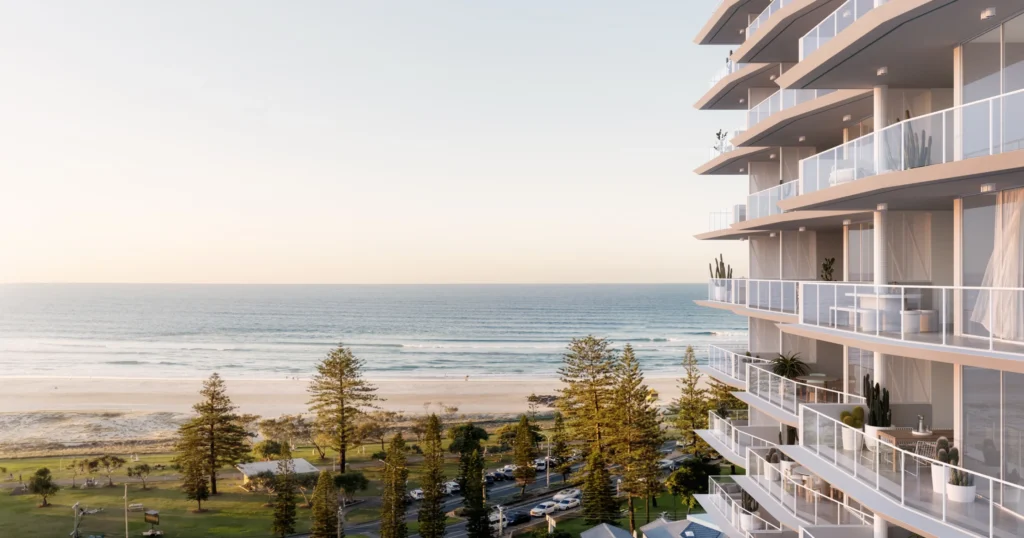
https://srqprojects.com.au/projects/448/onde
Q: What systems or processes are non-negotiable in your business?
A: Automated lead allocations to our salespeople, and lead management more generally, is very, very heavily relied upon. Furthermore it’s our base platform for managing sales documentation, contracts, sales advices, deposit receipts, identification retention.
Q: How has Property Shell changed the way you collaborate with your team and your clients?
A: Property Shell increased the amount of contact we have with our database, increasing the number of sales we make. We’re qualifying leads through multiple marketing channels through SMS and email automation and because of reporting and tracking of lead activity, we have a much better picture of the level of engagement which is shared with our clients through automated reporting.
Q: Do you think there are any features that most users might overlook or under utilise?
A: Reliable automation that makes sense. Email automation is a feature that we are constantly looking at ways to improve and dig deeper. Automated follow up through email and SMS have really improved engagement and the ability for us to communicate with leads. It’s something that we are continually improving. When a sale is made we can generate a sales advice to distribute to the developer and the lawyers to get a contract going. It means that there’s a lot less human time required to process a sale.
Q: What measurable improvements have you seen since using Property Shell?
A: The clients are impressed with our ability to report quickly and produce documentation when it’s required for a solicitor or a financier or an audit or an accountant to review a project. From an SRQ perspective, it’s probably saved us somewhere between $80,000 and $200,000 per year, in not having to hire additional staff to administer sales. That’s huge.

https://srqprojects.com.au/projects/412/elevaire-palm-beach
Q: Do you have any specific success stories where Property Shell made a noticeable difference for you?
A: One that jumps out was a sale that we made in Villea at Palm Beach midway through last year, the prospect enquired in January 2025, and we could see that they had opened an email. They had not answered three phone calls, and the lead went cold. Three months later, the sales person saw that the buyer had reopened the email, and we gave them a call. Two days later, they inspected the property and they made a sale. They bought a property, and it only happened because we were alerted to the fact that the buyer had reengaged with the EDM.
Q: Where do you see the biggest opportunity for technology in the property industry over the next few years?
A: I think there’s a huge opportunity obviously with AI and communicating with an AI agent. I think it’s still very rough, and it’s not quite a success yet, but I think eventually there’ll be a place for AI in a sales business. At the end of the day people buy property off people, so I think there’s an automation piece in potentially qualifying a buyer or providing information to a buyer before they talk to a person. For that small space in the journey, I think there’s room for technology to deliver more. But I still think at the end of the day a human wants to talk to another human when they buy a property.

https://srqprojects.com.au/projects/452/cavella
As technology continues to evolve, particularly with AI and automation, Nick believes the opportunity lies not in replacing salespeople, but in improving the space between first enquiry and first conversation. Systems that qualify, track, and surface buyer intent will increasingly separate high-performance project marketers from the rest. For founders and sales directors, the lesson is clear: consistent results at scale are rarely accidental. They are built on disciplined workflows, clear reporting, structured follow-up, and infrastructure that supports the team rather than slowing it down.
SRQ Projects is the go‑to marketing engine behind many of the Gold Coast’s most successful off‑the‑plan developments. Sharp strategy, iconic projects, and a track record that speaks for itself. The SRQ Projects team is currently working on The Frederick, Cavella, Villea, Onde, Holm, Elevaire and others.

