Property Shell vs Spark
Property Shell and Spark (spark.re) are both CRMs built for selling new developments, not adapted from a general sales CRM. Property Shell stays focused on the sales CRM: leads, stock, contracts and deposits, with settlement risk scoring, a built-in interactive site map, AI lead scoring and a portal for channel agents. Spark is a Vancouver company focused on North America, and we found no Australian customers or local support listed on its website.
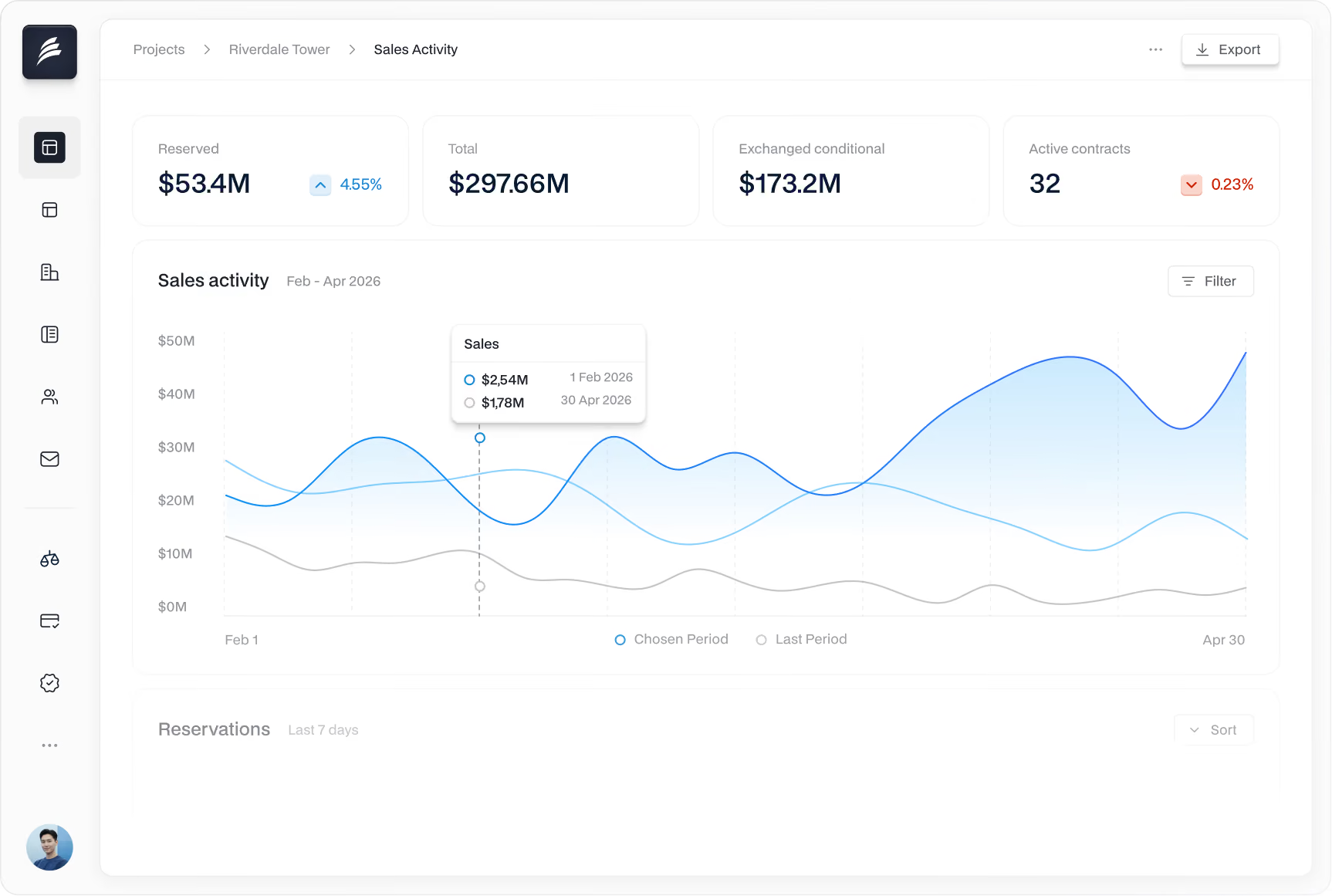


Property Shell and Spark, at a glance
Both are built for property developers and project marketers selling off the plan. Property Shell adds hands-on support from a team that knows project sales, from launch to the last lots. The right choice depends on which parts of the sale you want inside the CRM and which you are happy to run through partner tools.
Checked against propertyshell.com and spark.re in October 2026. "Not listed" means the vendor's website does not mention it.

Where Property Shell differs

Lead management that ranks every enquiry
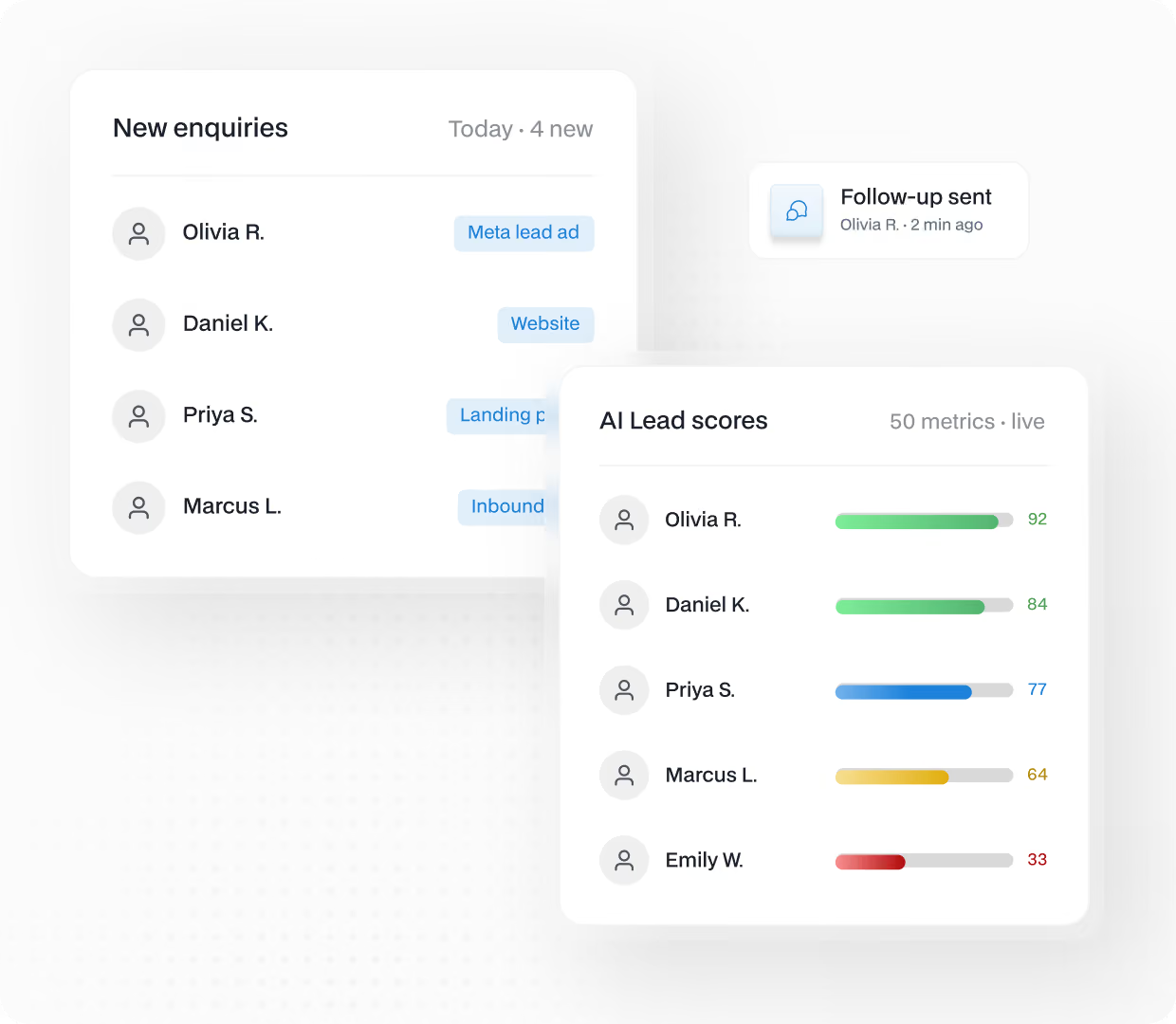
Enquiries from your website, landing pages and Meta lead ads land in one place and are followed up by email, SMS or WhatsApp. The scoring model weighs up to 50 lead metrics, from calls and emails to meetings and last contact, and you can change the weights. Your team calls the purchasers closest to signing first.
Sales optimisation →Support from people who know project sales
Property Shell is focused on one job: the CRM that runs project sales. Training and implementation are done by people who know project sales, and the same team stays with you from launch through to the final 10 to 15% of lots.
Integrations built around your setup
Property Shell connects to Outlook, Gmail, Mailchimp, Aircall, Xero, DisplaySweet, Meta lead ads and your project websites, and its Inbound Leads API brings enquiries from landing pages, ad platforms and other systems straight into the CRM. When a project needs a connection that isn't there yet, the Property Shell team can build it for you.
Plans you can read before the first call
Property Shell has four plans, each with a clear list of what it includes: Essential, Performance, Advanced and Enterprise. There are no setup fees, billing is monthly and implementation usually takes 3 to 4 weeks. Support grows with the plan, from email support to a dedicated account manager and SLA-backed support.
A portal for channel agents
SeeShell, an optional add-on, gives channel agents their own login. They browse your developments, see project details, imagery and available stock, and reserve lots, and every reservation lands in the CRM. Spark uses its own request forms to create, accept and allocate lots with agents and purchasers.
Settlement risk you can see early
Every transaction gets a settlement risk score, and purchaser and valuation inspections are booked with automatic reminders. After settlement, defects are logged with photos through the defects period.
Settlement management →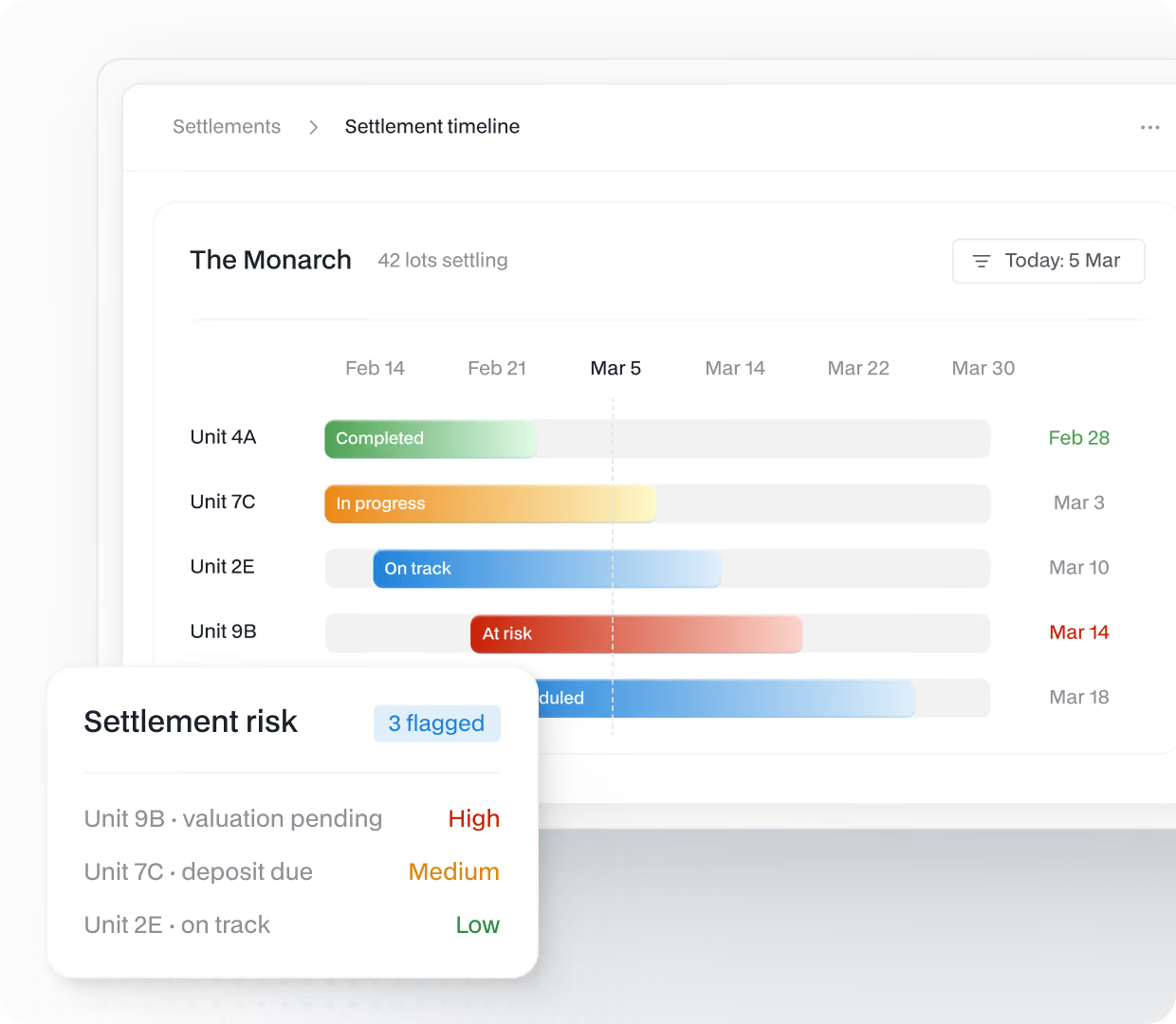
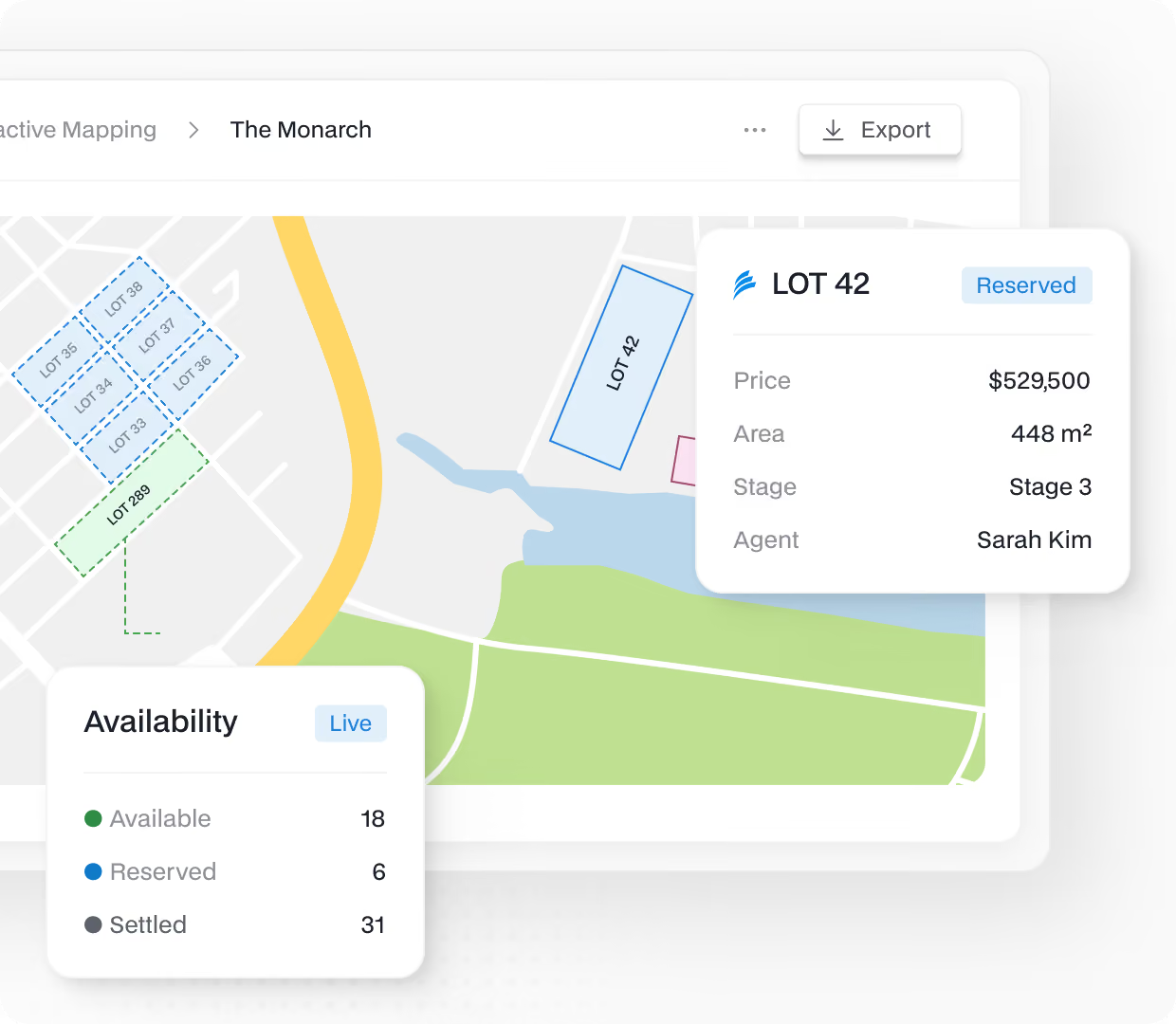

A site map that is part of the CRM
Property Shell's interactive map shows live availability for each lot, in the display suite and on your project website, with access set by role. Teams that already use DisplaySweet can connect it too. Spark connects to visualisation partners for the same job.
Interactive mapping →Spark lists KYC/AML checks and DocuSign e-signature on its website. Property Shell tracks deal terms and dates in the CRM.
Spark's Events Hub handles invitations, RSVPs and attendance.
Spark added warranty and homeowner care when it acquired Juniper in 2024.

Pricing and implementation
Property Shell prices each customer individually, per user or per project, based on the plan, the modules you need and the size of your projects, and bills monthly with no setup fees. The four tiers and their features are on the pricing page. Implementation typically takes 3 to 4 weeks, and you can roll out one module or one project at a time.
Spark sells through a demo and offers guided onboarding and data migration. Its website does not give a price or an implementation timeline; its Capterra listing shows one plan from CA$100 per month (checked October 2026), which may not reflect what larger projects pay today.
Moving from Spark to Property Shell
Data migration, onboarding and training
Every plan* includes data migration, onboarding and training.
Set up with the Property Shell team
The Property Shell team sets up your stock, contracts and workflows with you.
One project at a time
You can move one project first while the others finish in Spark.
*The Advanced and Enterprise plans add advanced data migration services, and Enterprise adds dedicated onboarding and implementation.

Trusted by leading property teams
We power projects of every scale.

“Setting up business systems from scratch is usually a painful process, but with Property Shell we were live in weeks, and the full setup, including property portal integrations came at no extra cost. The equivalent Salesforce implementation would have run into six figures before we could even start managing leads. We've since asked for things well beyond what most agencies would need and Lloyd's team has delivered every one of them.”


“Property Shell is an incredibly valuable platform that our sales and marketing teams rely on every day. From capturing and managing lead information through to tracking sales conversions, it provides everything we need to efficiently manage the customer journey from enquiry to settlement.”


“Property Shell has delivered returns we hadn't even anticipated. What we save in time and resources every month far exceeds the cost of the platform. We wish we had made the switch sooner."


“Property Shell has become the central hub for all of our project activity. Every team member knows exactly where things stand, deadlines are met and nothing gets missed. It's the backbone of how we run our developments."


“McGrath Projects had been looking for a bespoke solution for our CRM needs and had considered several ‘off the shelf’ options. We then met the team at Property Shell. They went to great lengths to understand our business – particularly the journey both buyers and developers take when marketing a project ‘off the plan’. From onboarding through to ongoing support, the Property Shell team has been exceptional."


Questions about Property Shell and Spark
Still have questions? Our team is here to help you find all the answers!

Is Property Shell an alternative to Spark?
Yes. Both are CRMs built for selling new developments, covering leads, stock, contracts and deposits. Property Shell also includes settlement risk scoring, an interactive site map, AI lead scoring and a portal for channel agents. It is known for its service and support, rated 5.0 for customer service on Capterra (October 2026).
Is Spark available in Australia?
Spark's website describes its market as North America and lists no Australian office or customers (checked October 2026). Property Shell is based in Melbourne and built around Australian off-the-plan sales, deposits held in trust and settlement.
Can Property Shell connect to the tools we already use?
Property Shell connects to Outlook, Gmail, Mailchimp, Aircall, Xero and Meta lead ads, and its Inbound Leads API accepts enquiries from websites, landing pages and ad platforms. Other integrations, including listing sites, can be built for your projects during onboarding.
How much does Property Shell cost compared with Spark?
Property Shell has four plans (Essential, Performance, Advanced and Enterprise), billed monthly with no setup fees. The price is quoted per user or per project, for your team. Spark also quotes after a demo.
How long does it take to switch from Spark to Property Shell?
Implementation typically takes 3 to 4 weeks, depending on the number of projects and how much data moves across. Teams can start with one project and add others later.

See Property Shell on your project
Bring one live or upcoming project to the call. We will show you how leads, stock, contracts, deposits and settlement would run for it in Property Shell.